A Moment with Dr. Stillman
He’s a college athlete who came home from school worn out, congested, and getting sick again and again. He’d been diagnosed with PANS or PANDAS, a chronic, smoldering infection of the brain. Patients are often given long courses of antibiotics, which often don’t work.
He had a long list of symptoms: fatigue, insomnia, brain fog, anxiety, joint pain, nosebleeds, and stubborn sinus congestion. He couldn’t gain weight no matter how much he ate. The stuffy nose had been there so long he barely noticed it. His mom put it plainly: “He has always been that way, so I think he is a little used to it.”
We see this a lot. A young person with a chronic infection, or suspected infection, who is struggling and isn’t sure what to do next. If you or someone you love suspects they’re struggling with chronic infections - Lyme, Epstein Barr, Candida, or PANS/PANDAS - this post is for you.
I also wrote a new book, The End of Autoimmunity, to give families a clearer roadmap for cases like this. It releases on September 15th, and you can preorder your copy HERE.
Where He Started
Here’s what he was struggling with when we started:
Severe fatigue, brain fog, anxiety, and trouble sleeping
Frequent nosebleeds and lifelong sinus congestion that flared every time he came home sick from school
Joint and back pain
Inability to gain weight despite eating plenty
Slow mornings, often needing about 90 minutes to feel normal
He had already tried curcumin and magnesium on his own. It helped a little, but not nearly enough.
Sound familiar? We specialize in cases like this.
What We Did Differently
We started by asking why he was tired, foggy, anxious, and congested. In cases like this, the immune system is always somehow impaired or confused. It is usually not attacking what it should be attacking (invading microbes) and often attacking what it should tolerate (your own tissues or harmless environmental stimuli, like pollen or pet dander).
We ran food testing instead of assuming it was “just allergies.” It found reactions to corn, soy, polysorbate 80, cumin, and turmeric. These were ingredients he was eating almost every day.
We ran our usual labs, which most patients have never run before. His ferritin, a marker of iron storage and inflammation, was 214. His urine was acidic. Blood work showed low zinc and low copper, while hair testing suggested his body was actually holding on to extra copper it couldn’t clear.
Here’s his initial HTMA:
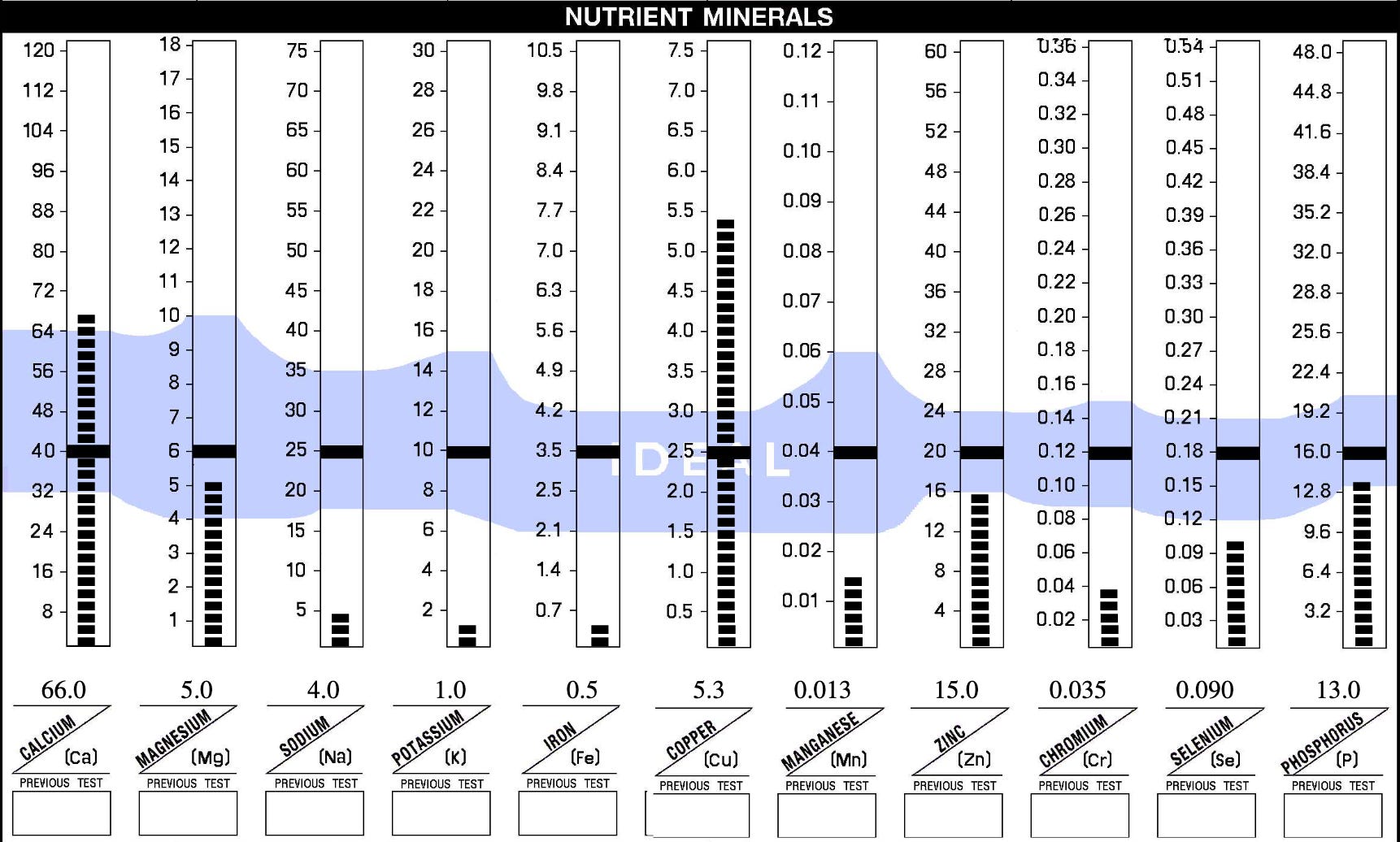
Note the elevated copper. While his blood copper was low, his hair copper is significantly elevated.
Patients with copper toxicity like this almost always endorse:
Anxiety
Fatigue
Brain fog
Difficulty sleeping
Racing thoughts
Feeling “ungrounded” or “disconnected” from reality
They need zinc, manganese, vitamin C, and more to ground themselves and restore their poise, focus, memory, and mood stability.
In The End of Autoimmunity, I go much deeper into how imbalances like copper toxicity and hidden infections can combine to create fatigue, brain fog, anxiety, and “mystery” symptoms in young people and adults.
The plan:
Remove the foods and additives he was reacting to
Shift his diet toward fresh vegetables and root vegetables instead of processed foods
Add a detox powder, vitamin C, vitamin D, and digestive enzymes
Start personalized supplements based on his HTMA and blood labs
Begin periodic blood donation to bring ferritin down carefully
Light therapy patches targeted to detoxification and calming of the nervous system
Where He Is Now
After about a month, I asked him to rate his overall health on a scale of 0 to 10.
Before, he was at 0–2. After just one month with us, he’s at 7–8.
In his words:
Brain fog: “Not nearly as much, which is nice.”
Mornings: No longer needs 90 minutes to feel human.
He’s “not really worried anymore” about how he’s going to feel on a given day.
He credits the supplements with about 70% of his progress and better eating and sleep with the rest.
We’ll keep following his labs and symptoms over time, but the early shift is clear.
Things to Think About
A college student’s mental and physical issues are rarely “just how they are.” Common patterns we see:
Hidden food reactions (especially to corn, soy, and additives like polysorbate 80) quietly driving chronic congestion, fatigue, and brain fog
Elevated ferritin reflecting not just extra iron, but ongoing inflammation and oxidative stress
Copper toxicity
A long list of “small” symptoms (nosebleeds, slow mornings, anxiety, joint pain) that are all connected
Two questions to ask if this sounds like your son or daughter:
What does he eat every single day that nobody has ever tested him for?
Does “he’s always been that way” really mean he’s well, or just that everyone is used to it?
Could nutritional deficiencies, toxic exposures, and hidden infections be driving their symptoms?
If this was helpful, subscribe for more “A Moment with Dr. Stillman” posts. If you know a parent with a child who sounds like this, consider sending it to them.
If you are not sure whether your family is ready for a full evaluation yet, a good first step is to educate yourself. My new book, The End of Autoimmunity, lays out the bigger framework for repair deficit, chronic infections, and toxic load in more detail than I can in a short case study. You can preorder it HERE ahead of the September 15 launch.
And if you are reading this before September 16, you can also enter to win a free digital copy through our Goodreads giveaway HERE.
P.S. If this sounds like your own son, daughter, or even your own story, book an evaluation with a member of our team.
In that visit, we:
Review history, symptoms, diet, and environment
Look at whether food reactions, iron, and other hidden drivers may be part of the picture
Clarify whether our practice is the right fit, or whether a trusted partner would serve you better
You can learn more and see available times here. Book your evaluation here.
As always, discuss any changes with your own licensed clinician. Read our full disclaimers, disclosures, and our position on health freedom here.
Until next time, be well,
Dr. Stillman
Educational content only. Not medical advice. See full disclaimers.