A Moment with Dr. Stillman
“I haven’t felt this good since I was in my youth.”
That’s what he told me after just three months on the right minerals, vitamins, and hormones.
He’s a veteran, married, and still working hard. You wouldn’t have been able to tell from looking at him that he was tired, inflamed, and “not himself.”
There was no clear diagnosis. His labs were “normal” and he was told this was just “getting older.”
We take care of a lot of men like him, and I want you to know that getting older doesn’t have to mean slowing down and losing your edge.
Most of the men we take care of can’t stand either. They want to stay sharp and fast for as long as they can, and they’d rather die with their boots on than with their feet up.
Where He Started
By the time he came to see us, his life looked something like this:
He made it through the workday, but came home tired and unmotivated.
Weekends were mostly about recovering, not enjoying.
His mood was low and his patience was thin.
His libido was waning.
His triglycerides were elevated, which is a major risk factor for heart disease.

He had a low vitamin D, slightly elevated homocysteine, borderline elevated insulin, and borderline elevated iron levels.





Here’s his first hair mineral panel:
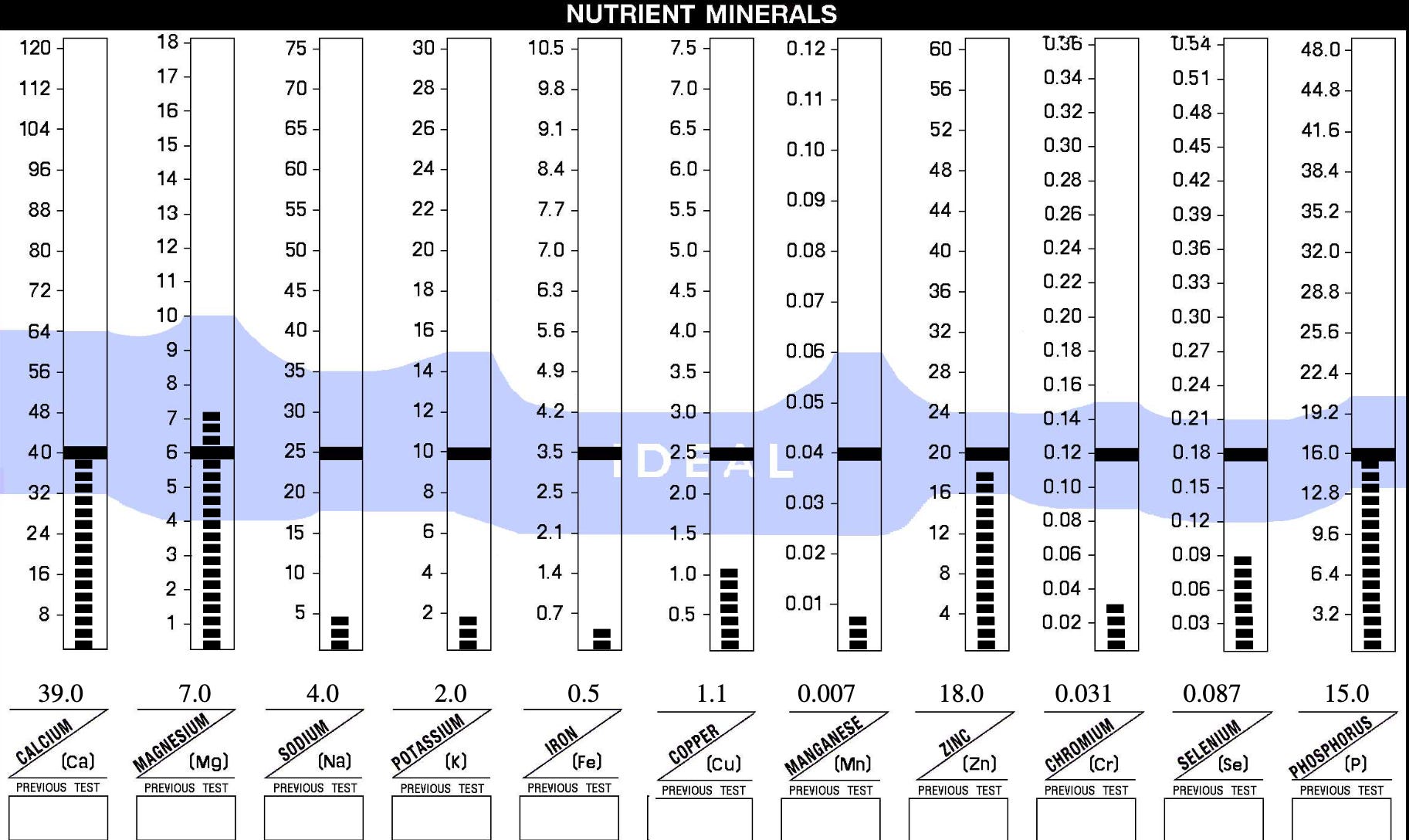
This is a classic pattern of burnout and mineral depletion. This is the hair test of a man who has been leaving it all on the field for decades.
He wasn’t “falling apart.” He was slowly fading away.
What We Did Differently
We did what we always do.
We asked if his labs were optimal - not just normal.
We ran a hair tissue mineral analysis for deeper insights into his metabolism.
We then:
Created a personalized supplement plan to correct vitamin D, homocysteine, and triglycerides.
Discussed the risks and benefits of hormone replacement, and started DHEA and testosterone injections.
Started blood donation.
Trended his labs every quarter to optimize quickly.
This is what optimizing your health looks like, particularly after 50.
Where He Is Now
Within a few months, his day‑to‑day life changed radically:
He had more energy and actually wanted to do things again, rather than forcing himself through the day and collapsing afterward.
His sex drive returned.
His mood and patience improved. He joked that he had “more patience for stupid people,” but underneath was a calmer, less irritable man.
His memory felt sharper.
His labs began to mirror what he was feeling:
Triglycerides, which had been elevated at 217, moved down to 86.
DHEA‑S, which had been around 344, rose to 467 that has historically matched his best seasons of life.
He was able to travel and stay active in ways he hadn’t managed in years. When I asked him if he wanted to change anything he shook his head and said, “If something’s good, just keep it.”
Things to Think About
Testosterone and DHEA are not just about libido. They are part of the signal your body uses to run:
Energy production
Mood and resilience
Motivation and drive
Memory and mental sharpness
Metabolic health, including triglycerides
When that signal fades, most men don’t suddenly “break.” They:
Stop initiating plans
Lose interest in hobbies
Become quicker to snap and slower to recover
Blame it on work, stress, or age
It creeps in slowly enough that everyone starts calling it “just getting older.”
In his case:
Elevated triglycerides showed a metabolism that was worn out and under stress
Low testosterone and DHEA‑S reflected declining pituitary hormone production
We don’t just replace hormones. We replace the nutrients that are vital to their production, optimize the biomarkers (like triglycerides) linked to longevity, and make sure diet and lifestyle are optimal for both longevity and vitality.
His story is a reminder that age is one factor, but it is not always the full explanation. Sometimes the body simply needs its signal restored.
If this was helpful, you can subscribe for more “A Moment with Dr. Stillman” posts. If you know a man this reminds you of, consider forwarding it to him (or to the person who usually schedules his appointments). A lot of these men need a gentle nudge to finally take care of themselves.
P.S. If you saw yourself or someone you love in this story and want help mapping the case, the place I usually recommend starting is a comprehensive evaluation with a member of our team.
In that visit, we:
Review history and symptoms
Clarify whether our practice is the right fit, or whether a trusted partner would serve him better.
You can learn more and see available times here. Book your evaluation here.
As always, discuss any changes with your own licensed clinician. Read our full disclaimers, disclosures, and our position on health freedom here.
Until next time, be well,
Dr. Stillman
Educational content only. Not medical advice. See full disclaimers.