A Moment with Dr. Stillman
“I don’t have the same energy I had 10 years ago.”
He’s a middle‑aged man, married, with “worn out body parts,” needing more and more sleep just to function. He assumed it was just because he was getting older. His testosterone sat in the low 300s, and he felt like it.
A year into a mineral‑balancing protocol, he was frustrated that he still didn’t feel much different day to day.
That’s not uncommon. Sometimes patients are just not self-aware. I love asking wives how their husbands are doing. “Oh, he’s so much better now,” is a common reply. Ask the husband? “I’m the same.” Maybe it’s that men are not self-aware. Maybe it’s that they don’t like to admit they were off their game in the first place.
When symptoms aren’t improving, my job is to watch the numbers and make sure they’re trending in the right direction.
His third hair test showed a very different story - his numbers changed wildly.
Where He Started
When we first spoke, his life looked like this:
Decades of slowly declining energy
“Worn out body parts” that left him feeling older than he is
Needing more sleep than ever and still not feeling like his younger self
Low libido (in the context of total testosterone in the 300s, which is low)
Shrinking capacity for the things he loves “on the lake, in the mountains, whatever”
He didn’t complain. He shrugged and said, “I figure that’s more age‑related.”
Why did he come to us if this was all “age-related?”
He was dealing with a serious autoimmune skin disorder - the kind where your skin peels off and you give children nightmares if you go out in public.
The conventional solution?
A drug that costs six-figures per year, and you’re lucky if insurance will cover even part of it.
He has more interesting things to spend his money on.
He started with us about nine months ago. He’s been taking everything we recommend consistently for that period of time, plus high-dose vitamin D therapy.
What We Did Differently
His first two hair tests were not worth writing about. Modest aluminum levels. Low minerals across the board. Elevated calcium and magnesium - hallmarks of long-term stress and “aging.”
But the third test is where we finally see a radical shift.
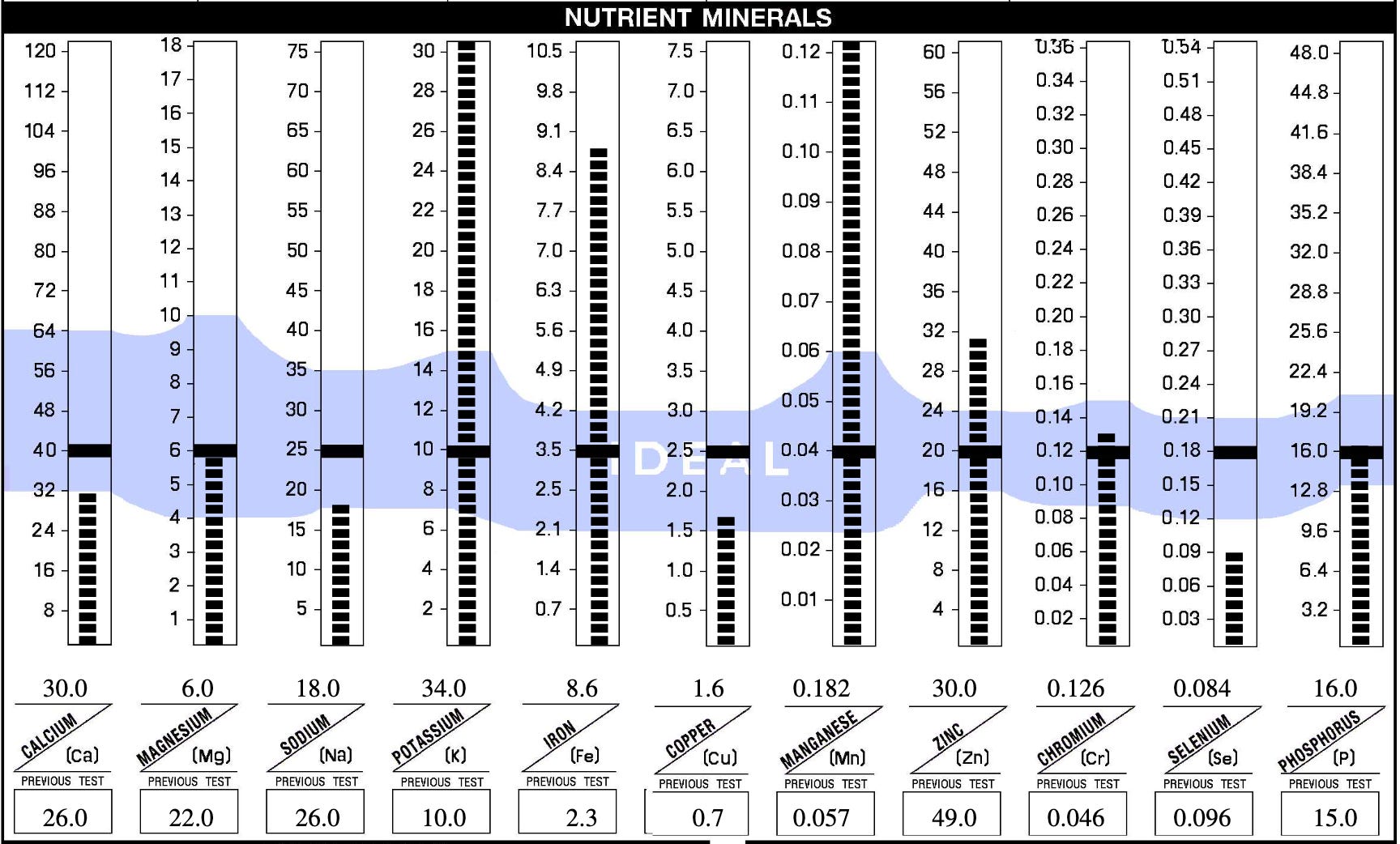
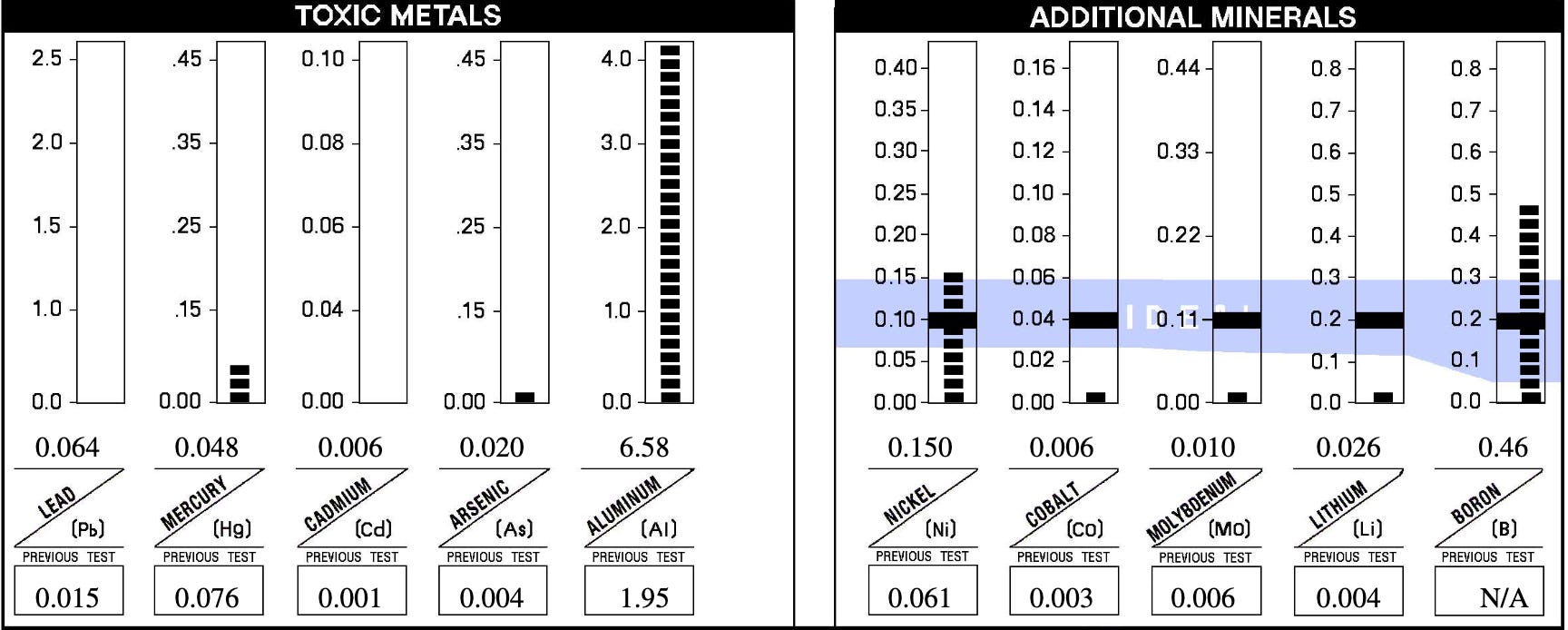
Iron rose dramatically from 2.3 to 8.6 mg %. That tells us his cells are regaining the energy to move things.
Aluminum increased by 237.4% from 1.95 to 6.58 mg %. This reminds me of Emily’s elimination of aluminum, from Chapter 2 of my book, The End of Autoimmunity.
Manganese, arsenic, cadmium, lead (quadrupled), nickel (doubled) all rose, indicating that he is eliminating these from his body.
These increases in heavy metals routinely correlate with clinical improvements.
How do we square clinical improvements with rising heavy metal levels? Shouldn’t we see the reverse?
First, are there any new exposures?
He denied:
Any aluminum-containing medications or personal care products, like antacids or deodorant
Aluminum cookware or ingredient consumption (think baking soda or tin foil)
Aluminum-canned beverage or food consumption
Increase in iron-rich foods
Iron supplements
Chocolate consumption (cadmium is often a contaminant)
Here’s how I think about this.
For the hair follicle to move minerals and metals from blood into hair, it has to have energy. If hair levels are low, it doesn’t mean metals aren’t in the body causing disease, it just means the body can’t mobilize them. Imagine trying to load a truck with trash destined for the dump, but you have no energy to do it. Trash sits in your house, piling up, not because you don’t want to take it out, but because you can’t physically move it into the truck bed. Get your minerals right, and your energy comes surging back.
That massive aluminum spike? That might be decades of accumulated aluminum being detoxified from the body in just one quarter.
We’ve been watching his testosterone for almost a year now. At this point, I recommended he just go ahead and try it. We’ve also (anecdotally) noted a link between hormones (including testosterone) and larger metal eliminations.
This understanding of physiology is decades ahead of the conventional view of minerals.
Where He Is Now
Today, if you ask him how he feels, he’ll still tell you:
“I don’t have the same energy I had 10 years ago.”
“I require more sleep.”
He doesn’t yet have a big “I feel 20 years younger” story, but he’s dumping metals like they’re going out of style.
I wish his wife had been on the call. She might have noticed improvements that were beneath his notice.
I often tell women that their men are “fine” until they are actively dying. It would be funnier if it weren’t so true.
Things to Think About
A few lessons from his case:
“I’m just getting older” often means “my hormones, minerals, and energy systems have been deteriorating for a decade.” You’re not aging - you’re running out of minerals, hormones, neurotransmitters, and more.
A hair test with low metals just means you’re not eliminating them. We expect metals to rise in the hair before they decline.
Sometimes how you feel lags behind what your labs say.
Sometimes your labs take months to change. Healing is not as simple as baking a cake. You are not a cake and your metabolism is not an oven. Accept that the process is not linear, nor is it predictable. Look on the bright side - your body can repair itself, and that’s more than can be said about any cake.
For more on this, read my book, available for pre-order here.
If this was helpful, you can subscribe for more “A Moment with Dr. Stillman” posts. If this sounds like you (or someone you love), consider forwarding it to them.
P.S. If you’re tired, foggy, and inflamed, and you’re ready for root-cause medical care, book an evaluation with a member of our team.
During the evaluation, we’ll:
Review your history and current symptoms
What you’ve tried, what’s worked, and what hasn’t
Get you clarity on where to go next, whether that’s becoming a member of our practice or a referral to a trusted partner of ours
Book your evaluation today. If you’re tired, foggy, and inflamed, we’d love to help you reclaim your health.
Until next time, be well,
Dr. Stillman
Educational content only. Not medical advice. See full disclaimers.
The high iron level on his most recent test is alarming. What do you make of it, since the body has no real way of eliminating iron (even when present in excess) other than thru blood loss. How common is it to see this on an HTMA? Does it correlate with high serum iron and/or high transferrin saturation?